
Golden Stars and Gatekeepers: The Journey From Inspiration to Bookshelf: The Publisher's Dilemma


Allow me to begin by throwing some numbers at you.
Approximately 80% of people begin to write a book but never finish
3% actually write a manuscript
0.05% actually publish
To put those number in context; Ottawa, our Nation's Capital, has a population of approximately 1,126,300 people.
That means over 900,000 begin writing a book.
Over 33,000 actually finish writing a manuscript.
533 publish.
But the truth of these numbers are somewhat hidden.
For starters, this first number is arbitrary and somewhat irrelevant. Do some research or scour the internet and you'll find numbers that vary and hover around 80% or or even as high as 97%. It also depends on what this exact definition is, ranging from "those who actually begin writing but never finish," to "those who simply want or dream to."
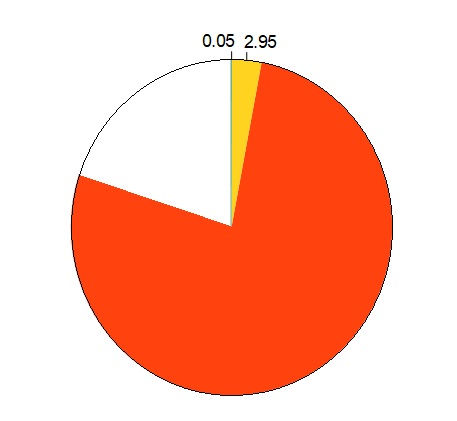
Ultimately it is a moot statistic. The number varies as much as how we frame the question. It really doesn't matter the size of the orange and white on this chart.
What matters are the other two numbers. These two statistics become the crux of this question; the separating of the wheat from the chaff:
Why do only 0.05% of the 3% that finish writing a manuscript make it to publication?
What happens to those 2.95%?
I'm sure some couldn't be bothered to pursue it, some lack ambition, and some simply can't due to ignorance, fear, finances, time restraints, or any number of reasons. We could group this entire category into miscellaneous and assign a certain number or percentage. These reasons or excuses are all due to the individual.
But what of those who have the ambition, know-how, and means, but yet somehow fail?
Again, just because someone finishes writing their manuscript and follows through is no guarantee that their work is actually good, worth reading, or worth publishing.
The Gatekeeper Effect
Somewhere in this question of "what happened to this 2.95%?" is the issue of Gatekeepers.
Historically speaking, traditional publishers don't know good literature from poor literature.
There are numerous authors throughout history that struggled their entire lives to see publication, only posthumously to be considered literary masters. (i.e. H.P. Lovecraft, Edgar Allan Poe, Emily Dickinson, Franz Kafka, Herman Melville (author of Moby-Dick), Jane Austen, and the list goes on).
The Penguin Random House-Simon & Schuster antitrust trial revealed that over 50% of all their titles (29,000 per year) never sell over a dozen copies. (And yes, this 'fact' should be questioned), but only goes to argue further that traditional publishers truly don't know good from poor literature.
When we ask the question, What happens to those 2.95%? we need to answer it with another question;
Who's job is it to determine good literature, the publisher or the reader?
If it's the publishers' job (and for most of publishing history, it has been), then the problem is one of Gatekeepers. It's the publishers that are dwindling these numbers down, literally playing gatekeeper.
The way is barred.
The path is blocked.

The Golden Star Effect
But what if it's the readers' job to determine good and poor literature?
A great example is getting one's book listed, mentioned or featured by Oprah Winfrey. You're virtually guaranteed a best seller. This can be a good example of a mediocre book being a good seller because of successful marketing.
The Golden Star Effect says, "If a book has a golden-star sticker on, it MUST be good," arguing that the average reader really doesn't know good from poor; that the average person relies on some sort of authority telling or allowing readership to determine what is good.
But, at least currently, The Golden Star Effect is moderated by The Gatekeepers Effect because the only books presented to readers have already been filtered through traditional publishers.
So once again, we return to the Gatekeepers Effect.
However, this has been changing recently. We've seen the phenomena of the rise of the Indie-author in the 20-teens. This has evolved into the rise of the small to mid-size presses of the early 2020's, honing and finetuning the up-and-coming indie-authors' works. We've also seen the shadowy industry of the predatory vanity presses hound and follow. (See The Wild West of Publishing).
The literary landscape of Traditional Publishers vs Self-published Authors is no longer the only options.

The dichotomy between Traditional Publishing Houses or Predatory Vanity Presses has evolved, offering more options beyond simply traditional publishers or self-publishing or predatory vanity presses.

There is a new breed of small to mid-sized publisher emerging - those that reject the concept of The Gatekeepers Effect - those that embrace the idea that it is the reader who is to determine good from poor literature, their focus being primarily on facilitating, providing an avenue for the author to reach the reader, allowing the reader to determine good from poor, understanding that bookstores and bookshops are part of this equation. Taking some of the best elements from all three perspectives in an attempt to best facilitate the new and up-and-coming author.
3% of people who begin to write their book's manuscript finish.
Only 1 in 2,000 (0.05%) actually see publication.
The question begs to be asked, what happens to that lost 2.95%?
In Ottawa, what happens to those 33,000 manuscripts?
At Broken Keys Publishing & Press, we're here to change these numbers.
Keep up to date with breaking news, new releases,
book signings, and events, and keep your thumb on the pulse of Ottawa's literary scene.
Subscribe here and/or follow us on social media


Comments